Lower back pain is one of the most common physical complaints, often caused by long hours at a desk, poor posture, or simply the daily wear and tear of life. When moving is no longer effortless, it can affect your mood, your work, and your independence. Fortunately, introducing a few gentle movements into your daily routine can make a significant difference.
Here are five safe, effective stretches you can easily do at home to reduce stiffness, improve your posture, and enhance your daily comfort.
1. The Knee-to-Chest Stretch
This gentle movement stretches the lower back and hamstrings, helping to relieve tension and restore flexibility.
▶ How to do it
Lie flat on your back with your knees bent and feet flat on the floor. Slowly bring one knee up to your chest, using both hands to gently pull it closer. Hold for 20–30 seconds, feeling a gentle stretch in your lower back. Lower the leg and repeat with the other side.
2. The Piriformis Stretch
A classic and highly effective way to mobilise the spine and release built-up tension in the back muscles.
▶ How to do it
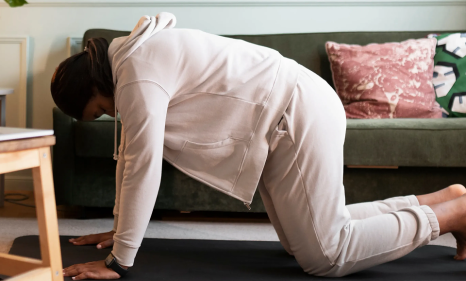
Start on your hands and knees in a tabletop position. Inhale as you drop your belly toward the mat and lift your chin and chest (Cow). Exhale as you draw your belly to your spine and round your back toward the ceiling (Cat). Move smoothly between these two positions 6 to 10 times.
3. Child’s Pose
This resting posture provides a gentle, soothing stretch for the lower back, hips, and thighs.
▶ How to do it
Kneel on the floor with your toes together and your knees hip-width apart. Rest your hips on your heels. Exhale and lower your torso between your knees, extending your arms forward on the floor. Rest your forehead on the ground and breathe deeply for 30 to 60 seconds.
4. Pelvic Tilts
Pelvic tilts are excellent for building core stability and massaging the lower back against the floor.
▶ How to do it
Lie on your back with your knees bent and feet flat. Notice the natural curve of your lower back. Flatten your back against the floor by gently tightening your abdominal muscles and tilting your pelvis up slightly. Hold for 5 to 10 seconds, then release. Repeat 10 times.
5. The Piriformis Stretch
The piriformis muscle, located deep in the buttocks, can cause lower back and leg pain when tight.
▶ How to do it
Lie on your back with both knees bent. Cross your right ankle over your left knee. Grab the back of your left thigh and gently pull it toward your chest until you feel a stretch in your right glute. Hold for 30 seconds, then switch sides.
Listen to Your Body
While stretching is highly beneficial, it should never cause sharp pain. Move slowly, breathe deeply, and only go as far as your body comfortably allows.